The Fascination of Chinese names

When a new baby is born in China, he or she gets a name that no other person known to the parents has. The name is a combination of words or radicals that have a meaning, which the parents believe to be ideal for the baby. What an ideal name is like will be discussed later in this article.

A lexical category of names has not developed in Mandarin Chinese for the simple reason that the so called “name taboo” forbids the same name to be used more than once. Thus a Chinese proper name can be identified as a name only in a context; unlike words such as Marie or Thomas which in western cultures are immediately understood as proper names.

A further fascinating fact is that a Chinese person may have quite a few different names that are used in different contexts. The so call called “milk name” is used in the family and by close friends; the so called “official name” for official purposes. An artist may have more than one pen names and a distinguished older person a so called “respect name”. People, who deal with foreigners, take an English, Russian or German name to make communication easier. All this suggests that the self-identification of a Chinese person does not depend on his name to the same extend as it does in western cultures.

Chinese names have always fascinated me, because they seem so rich in meaning and aesthetical values; they look like paintings, have a musical tone and they seem to carry a great deal of symbolic content. Such names are comprehensive symbols, which can be perceived with all the senses: they are visual and auditory and they can be smelled and even tasted.

Think of a little girl, who calls herself  香花  Xiāng Huā “fragrant flower”. A  lovely name makes the lady lovely.
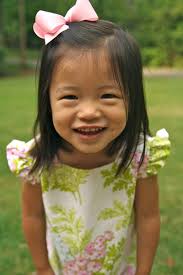
Perhaps her name is  香花  Xiāng Huā “fragrant flower”.

康有为 Kāng Yǒuwéi “a promising, active and productive person”.

康有为 Kāng Yǒuwéi was a Chinese scholar, noted calligrapher and prominent political thinker and reformer of the late Qing Dynasty (Wikipedia). His name could be translated as “one who is promising, active and productive“. A powerful name makes the man powerful.

When naming a baby the parents often express their wishes for the future life of the child. They also may express their own wishes like the one of having a son, when they call their daughter  带弟  Dài Dì “bring little brother”.

I believe that people in western cultures often tend to measure a great importance to the symbolic meaning of Chinese names. The symbolism of a name is interesting to us because it is often missing in our own names. We seldom know where our names come from or what they mean. The historical origin and the etymology of western names seem not to bear great significance in modern times. Another important, but not so obvious, aspect of a Chinese name is the information the name may contain about the social background of its carrier.

I wrote my second Bachelor’s paper on Chinese names. If you’d like to read the whole text, here is the link A Chinese Name is an Act of Creation

For my German speaking readers here is a link to an article of mine that was published just before the Olympic Games in Beijing 2008 Der Bund Artikel Namen . Scroll down the page to find my article.
Konzert des Chiao-Ai Chor

Am Sonntag, 24. März 2013 um 16.00 Uhr in der Petrus Kirche in Bern

singt der Chiao-Ai Chor schöne chinesische und japanische Lieder. Mehr Informationen können Sie aus dem angefügten Flyer entnehmen.

Der Chiao-Ai Chor ist ein hoch professioneller Chor, welcher ein vielseitiges und unterhaltsames Programm bietet.

Eintritt frei (Kollekte) / Kleiner Apéro nach dem Konzert

Link zum Flyer Chiao-Ai_concert2013_flyer

Die Terrakottakrieger des Qin Kaisers

Ein Besuch des Museumsdorfes 28 km östlich von Xian in der VRC  ist empfehlenswert und für westliche Individualtouristen absolut machbar, obwohl schon eine echte Herausforderung. Ins Museumdorf kommt man fast nur im Hotel gemieteten Auto mit Chauffer. Aber im Dorf selber kommt man zu Fuss überall hin und es ist nicht unbedingt nötig, dort einen Führer zu nehmen.

Jetzt kommen aber einige Krieger nach Bern ins Historische Museum:

————————————–

“Qin – Der unsterbliche Kaiser und seine Terrakottakrieger

Vom 15. März bis 17. November 2013 können Sie im Bernischen Historischen Museum in der Ausstellung «Qin – Der unsterbliche Kaiser und seine Terrakottakrieger» die Geschichte und Zivilisation Chinas entdecken. Lernen Sie den Ersten Kaiser Qin Shi Huangdi kennen, der vor mehr als 2000 Jahren das chinesische Kaiserreich schuf. Erkunden Sie seine monumentale Grabanlage mit der berühmten Terrakottaarmee. Diese wurde 1974 entdeckt, gehört seit 1987 zum UNESCO-Weltkulturerbe und gilt als 8. Weltwunder.

Rund 220 faszinierende Originalexponate aus Museen und Archäologieinstituten in China vermitteln Ihnen nicht nur die Entstehung Chinas, sondern lassen Sie in die Welt des Ersten Kaisers und seiner Terrakottaarmee eintauchen.“ (http://www.bern.com/de/specials/Qin)

Link zum Museum:  Qin Austellung

China’s one-child policy

China’s one-child policy was implemented in 1979 to control population growth. However, the restrictions have never applied to all nationals of the People’s Republic. Ethnic minorities, rural couples and couples who are both only children themselves are allowed to have 2 children. Furthermore, multiple births are mostly regarded as a single child. Three children per family are allowed from May 2021.

Parents, who have more than the allowed number of children are punished by high fees and / or loosing various benefits. They may even lose their jobs. Forced abortions and sterilizations are brutal methods of executing the law. However, wealthy families can have more children, if they pay a special fee to the government, give birth in Hongkong etc.

The reality looks a little different. In addition to families that respect the law I actually know a couple of “normal Han-families”, who have found a way to go around the strict rules and have 2 or more children without being punished for it.

The negative effects of the policy, that should have been revised a long time ago according to many experts, are evident today. There are 15 – 20% more males than females today (depending on source). It is difficult for Chinese men to find a wife. This is evidently causing social problems. Another difficulty is that the working population has to support an ever growing aging population. Experts believe that simply not being able to afford more than one child is going to restrict the population growth in the future.

If you want to read more here is a link to a Guardian article on the topic China thinktank urges end of one-child policy .